R17
Know when they log off, and when they come back
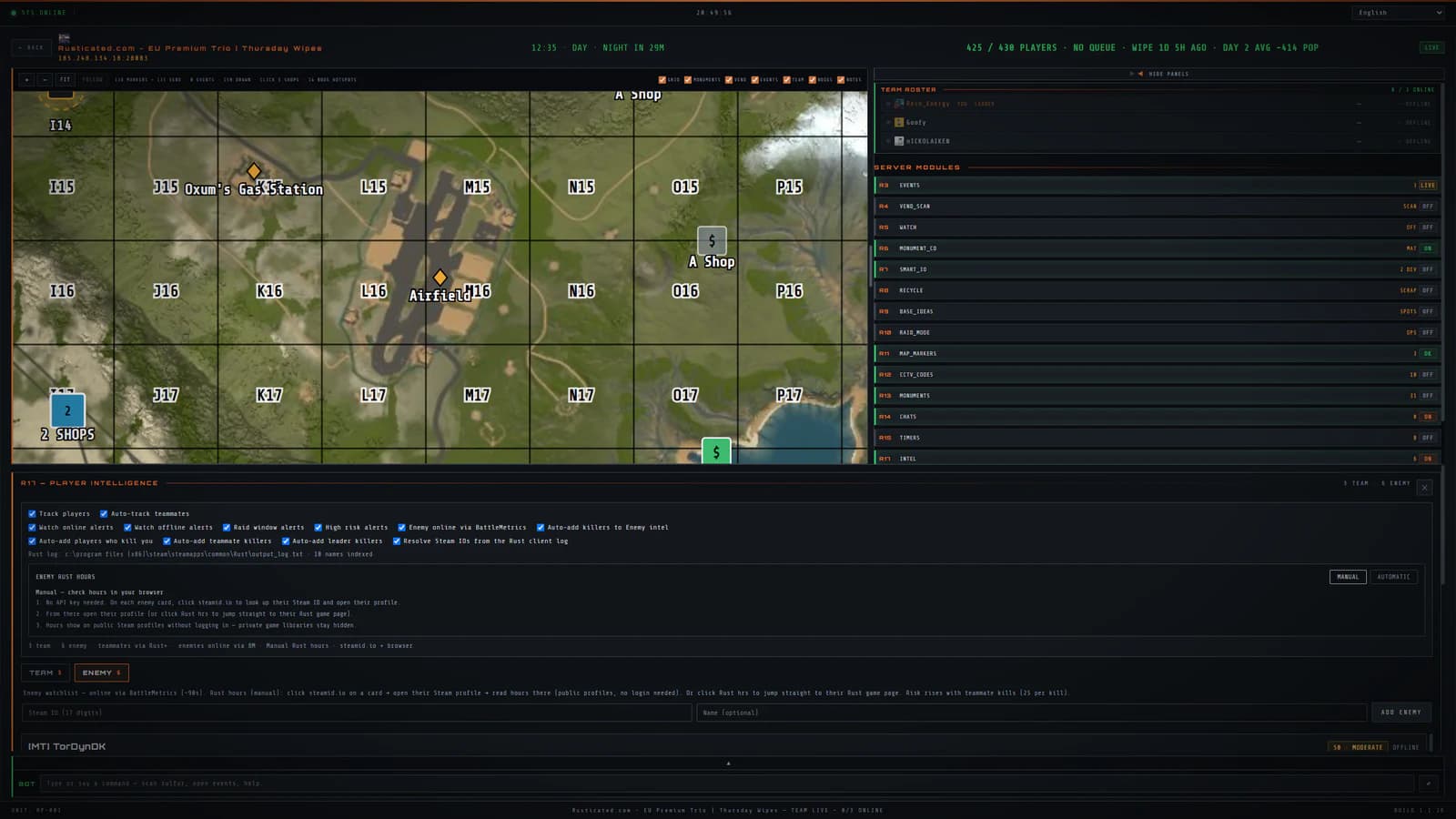
Rust+ only tells you about your own team. This builds a profile of everyone else: when they play, when they sleep, and the window when their base is quietest. All of it from data the server and Steam already publish.
- When they are on, and when they are not
- R17 keeps a per-player history: online and offline sessions, AFK stretches, and an hour-by-hour, day-by-day activity heatmap. A name stops being a stranger and becomes a schedule.
- The raid window, predicted
- From that history it estimates a target's prime hours and the window when they are least likely to be home. You raid the quiet hour on purpose instead of rolling the dice on whoever happens to be offline.
- A watchlist that pings you
- Put a player on the watchlist and get an alert when they come online or drop off, to the desktop or wherever R101 sends it. You find out the counter-raid crew just logged in without staring at a roster.
- Killers file themselves
- Die to a player, whether that is you, a teammate or the team leader, and the killer lands on the Enemy watchlist on their own, with a kill note like Auto: killed PlayerX @ E19. Suicides, falls and scientists never count, teammates are never added, and each scenario has its own toggle in the R17 settings.
- Real Steam IDs from your own Rust log
- A killer's name alone cannot be tracked. The app reads the Rust client's own log file on your PC, the same Player.log the game writes anyway, and matches the name to its real 17-digit Steam ID within seconds of the kill. Until it resolves, the name waits in a pending list, and you can attach an ID by hand any time.
- The Steam hours behind the name
- With a Steam Web API key it pulls a player's Rust hours and profile, and reads enemy online presence through BattleMetrics. That is the piece Rust+ leaves out, because the Companion API only reports your own team.
- It watches, it does not cheat
- Every input here is public: the server's own Companion data, the BattleMetrics API and the Steam Web API. It never injects into Rust, reads its memory, or shows a live enemy position, which are the things an anti-cheat looks for.
About Player intel
Is a Rust player tracker bannable?
This one is not doing anything an anti-cheat watches for. It reads public sources: the Companion API, BattleMetrics and the Steam Web API. It never touches the game client, its memory, or your position on the map. It is analysis of data that is already published, not a wallhack.
How can it show when an enemy is online if Rust+ only shows my team?
Through BattleMetrics, which tracks server sessions independently of Rust+. Rust+ only reports your own team's status, so the enemy side of the picture comes from BattleMetrics presence, matched to the profiles R17 builds over the wipe.
Do I need a Steam API key for it to work?
The online/offline patterns and raid-window prediction work without one. The Steam hours and profile lookups need a free Steam Web API key, which you drop into R102 once.
It does not work alone
Player intel is one part of RustPocket. The related modules below show how the app was organised.
R101
The alert reaches you when the game does not
Raid, death, alarm, event and restock alerts for Rust. Free on Telegram, or add SMS and voice calls through Twilio. Your PC keeps listening while you are out.
R10
Raid math, and a warning before you log off
Sulfur and explosive costs for any wall, by workbench tier. Plus an offline raid warning that reads your live situation and tells you when logging off is expensive.
RustPocket is paused. New subscriptions and downloads are closed.